Wedding Veil Styles That Match Your Gown and Complete Your Aisle Style
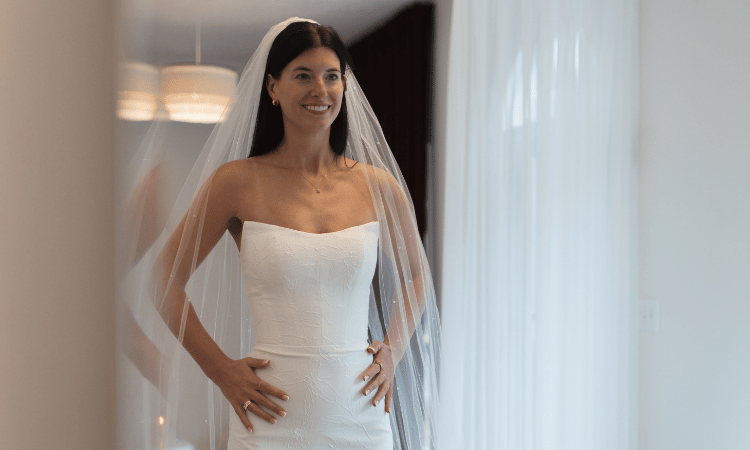
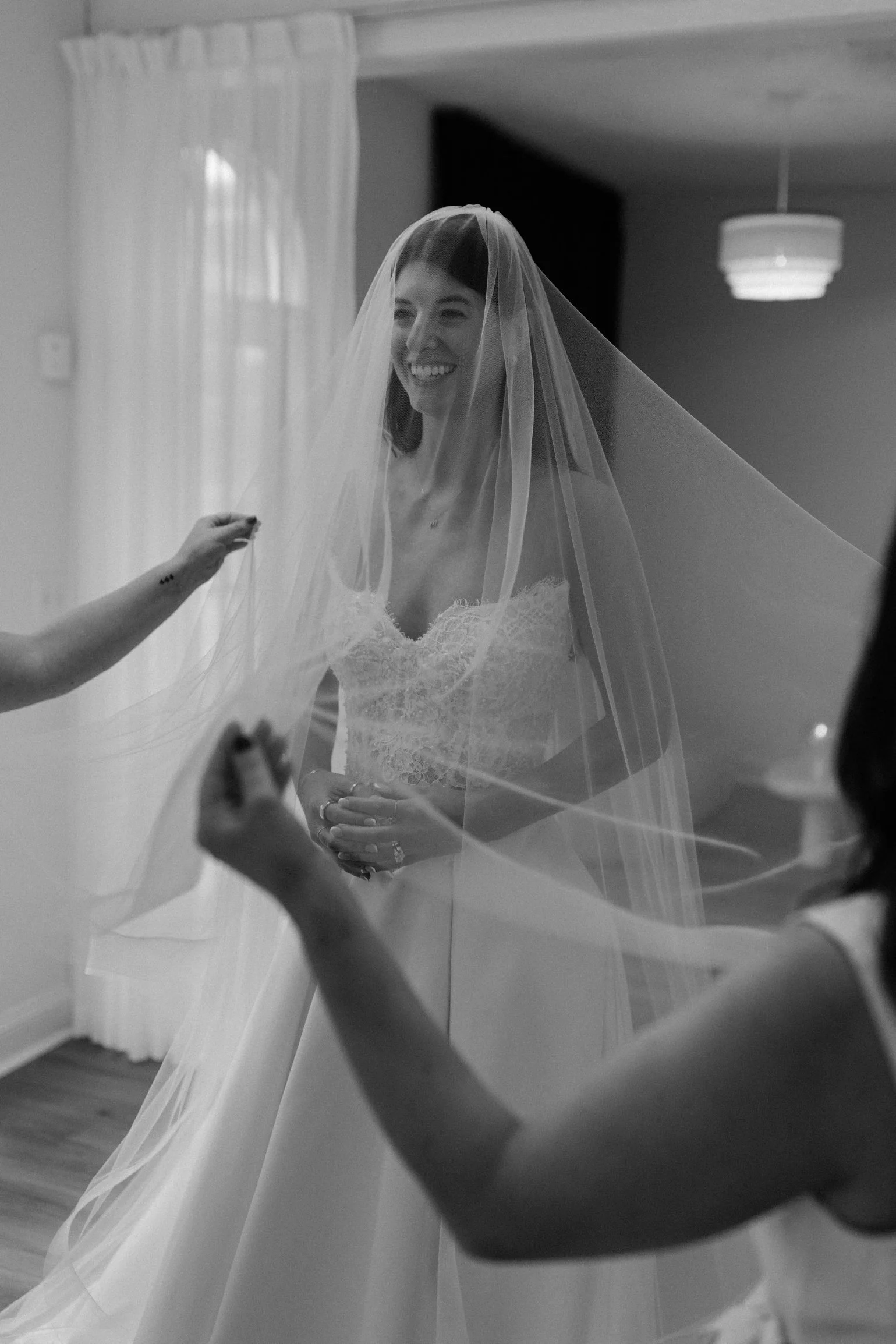
Your dress sets the tone for your wedding day, but the veil shapes how everything comes together. It frames your face, moves with you, and adds that soft finish that feels unmistakably bridal.
The right choice does not compete with your gown. It complements it in a way that feels natural and effortless.
With so many wedding veil styles available, it’s easy to feel unsure about which one to choose. Length, fabric, volume, and placement all play a role in how your final look comes together. When each element aligns, your aisle style would feel cohesive without trying too hard.
Understanding Wedding Veil Styles and Why They Matter
Wedding veil styles vary in length, shape, and detail. Each option creates a different visual effect depending on your gown and how you want to feel walking down the aisle.
Short veils like birdcage or shoulder-length styles feel playful and modern.
Mid-length veils such as elbow or fingertip feel balanced and easy to wear.
Longer styles like chapel and cathedral veils bring a sense of drama and tradition.
The purpose of a veil is not only aesthetic. It helps soften the lines of your dress and adds movement as you walk. A veil can highlight details or gently blur them depending on the fabric and design.
When you start exploring wedding veil styles, focus on how each option interacts with your gown instead of treating it as a separate piece.
Matching Wedding Veil Styles to Your Dress Silhouette
Your dress silhouette guides your veil choice more than you might expect. Proportion plays a key role in keeping everything visually balanced.
A-line gowns pair well with fingertip or chapel veils. These lengths follow the natural shape of the dress without overwhelming it. They create a soft, continuous line from head to hem.
Mermaid and fitted silhouettes benefit from slightly longer veils. A chapel or cathedral veil adds contrast to the fitted shape and enhances the overall drama.
Ball gowns can carry the weight of a cathedral veil with ease. The fullness of the skirt supports a longer veil without feeling too heavy.
Sheath dresses often work best with simpler wedding veil styles. A clean fingertip veil or even a shorter option keeps the look refined and modern.
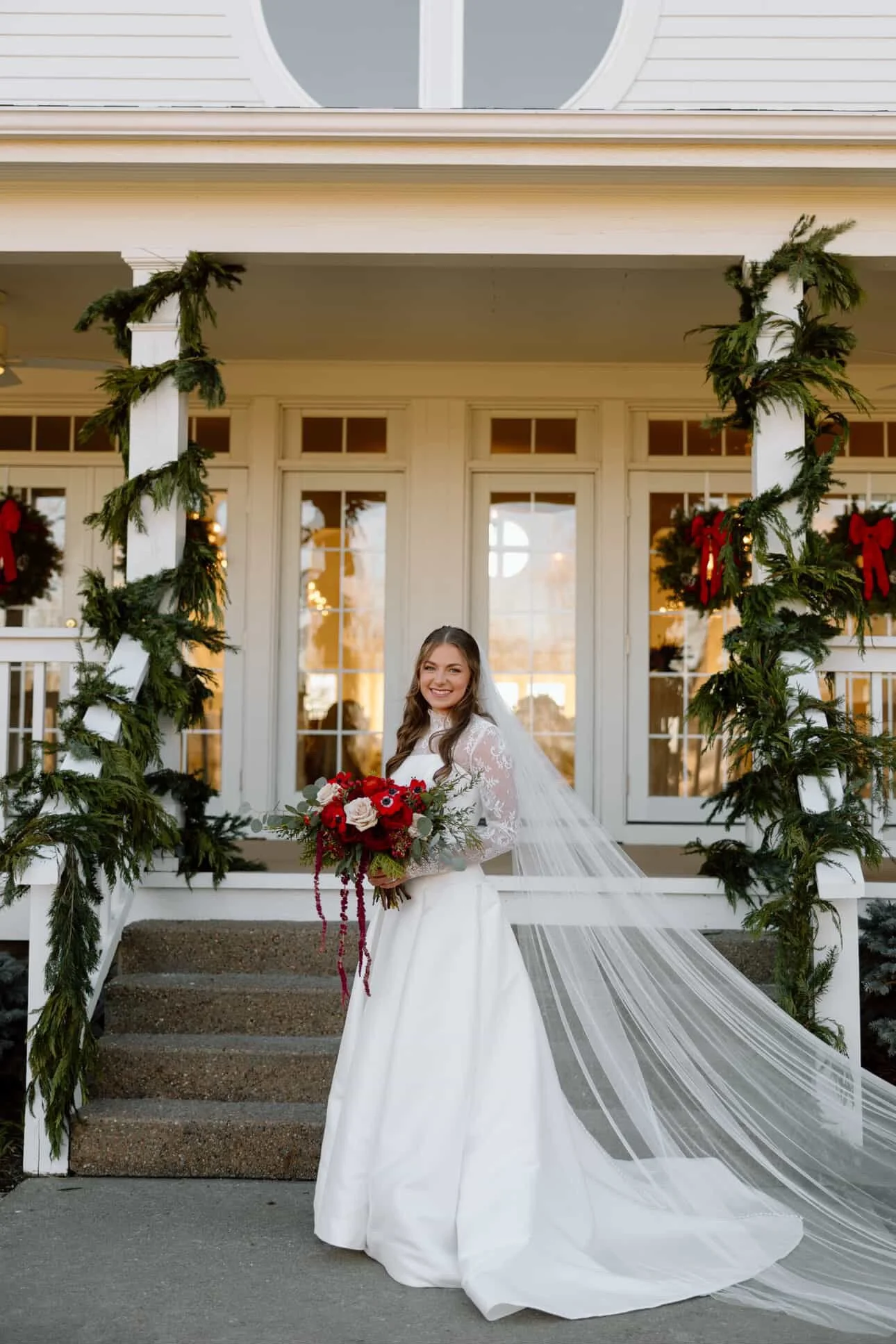
Elizabeth in her Donna veil by Sara Gabriel
Choosing the Right Length
Length affects both movement and presence. It also influences how your dress photographs throughout the day.
A fingertip veil feels light and easy. It moves naturally and works well for most venues. This length suits brides who want a polished finish without too much volume.

Stephanie in her custom Kelly Veil by Sara Gabriel
A chapel veil extends slightly beyond your train. It feels traditional but still manageable. This option works well for both indoor and outdoor ceremonies.

Katie in her Stacy veil by Sara Gabriel in downtown Kansas City
A cathedral veil creates a statement. It trails behind you and adds a sense of formality. This style feels especially striking in larger venues or classic settings.
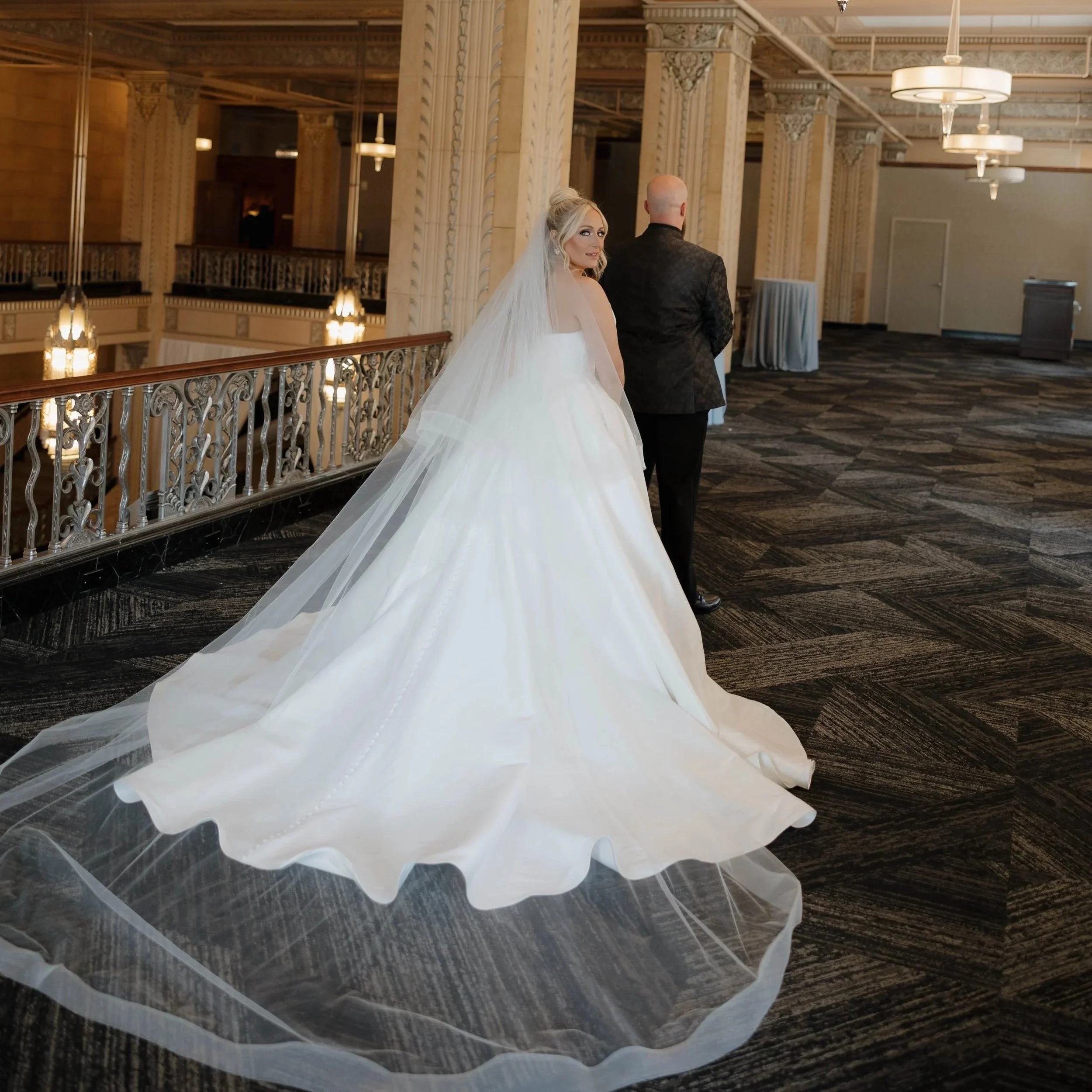
Lucy in her cathedral Hayley veil by Sara Gabriel
Shorter wedding veil styles like shoulder-length or birdcage feel relaxed and contemporary. They suit smaller weddings or brides who prefer minimal details.
Think about how you want to feel as you walk down the aisle and how much presence you want your veil to have.
Fabric and Detail Choices That Complement Your Dress
Fabric determines how your veil interacts with light and movement. Tulle remains the most popular option because it feels soft and weightless.
A plain tulle veil keeps the focus on your dress. It works well if your gown has intricate lace or beading. This choice creates balance without adding visual noise.
Lace-edged veils echo details found in many gowns. If your dress includes lace, a matching edge can tie everything together. The key is to keep the patterns cohesive rather than identical.
Beaded or embellished veils add texture and a hint of sparkle. These wedding veil styles suit simpler gowns that benefit from an added layer of interest.
Keep in mind that too many details can compete with your dress. Each element should feel intentional and easy to take in at a glance.

Miranda in her custom Eve veil by Sara Gabriel
How to Coordinate Your Veil with Your Hairstyle
Your hairstyle influences how your veil sits and moves throughout the day. Placement changes the overall feel of your look.
An updo creates a classic base for most wedding veil styles. Placing the veil above the bun adds volume and formality. Placing it below feels softer and more relaxed.
Half-up styles allow for flexibility. You can secure the veil at the crown or lower depending on the effect you want.
Brides with short hair often lean toward shorter veils or birdcage styles. These options feel intentional and proportionate.
Always consider comfort and security. Your veil should stay in place without constant adjustment.
Balancing Accessories Without Overcrowding Your Look
Your veil is only one part of your overall styling. Accessories should support each other instead of competing.
If your veil includes embellishments, keep your jewelry simple. This allows the veil to remain the focal point.
If your veil is minimal, you have more flexibility with statement accessories. A bold earring or hairpiece can add personality without overwhelming the look.
Your aisle style should feel cohesive from every angle. Each piece should contribute to the overall feel rather than stand out on its own.
If you are still planning your appointment, this guide on what to bring wedding dress shopping can help you prepare the right accessories to try on with your gown. Your Aisle Studio stylist is here to guide you to achieving an unforgettable aisle style.
When to Choose Simplicity Over Statement
Not every gown needs a dramatic veil (although you could convince me of a long veil with almost any gown). Some dresses feel complete with a simpler choice.
If your gown features heavy lace, intricate beading, or unique textures, a clean veil creates balance. It allows the dress to remain the focus.
If your gown leans minimal, a more detailed veil can elevate the overall look. This contrast adds dimension without changing the dress itself.
The goal is not to follow rules. It is to create a combination that feels natural when you see it together.
Trying Wedding Veil Styles During Your Appointment
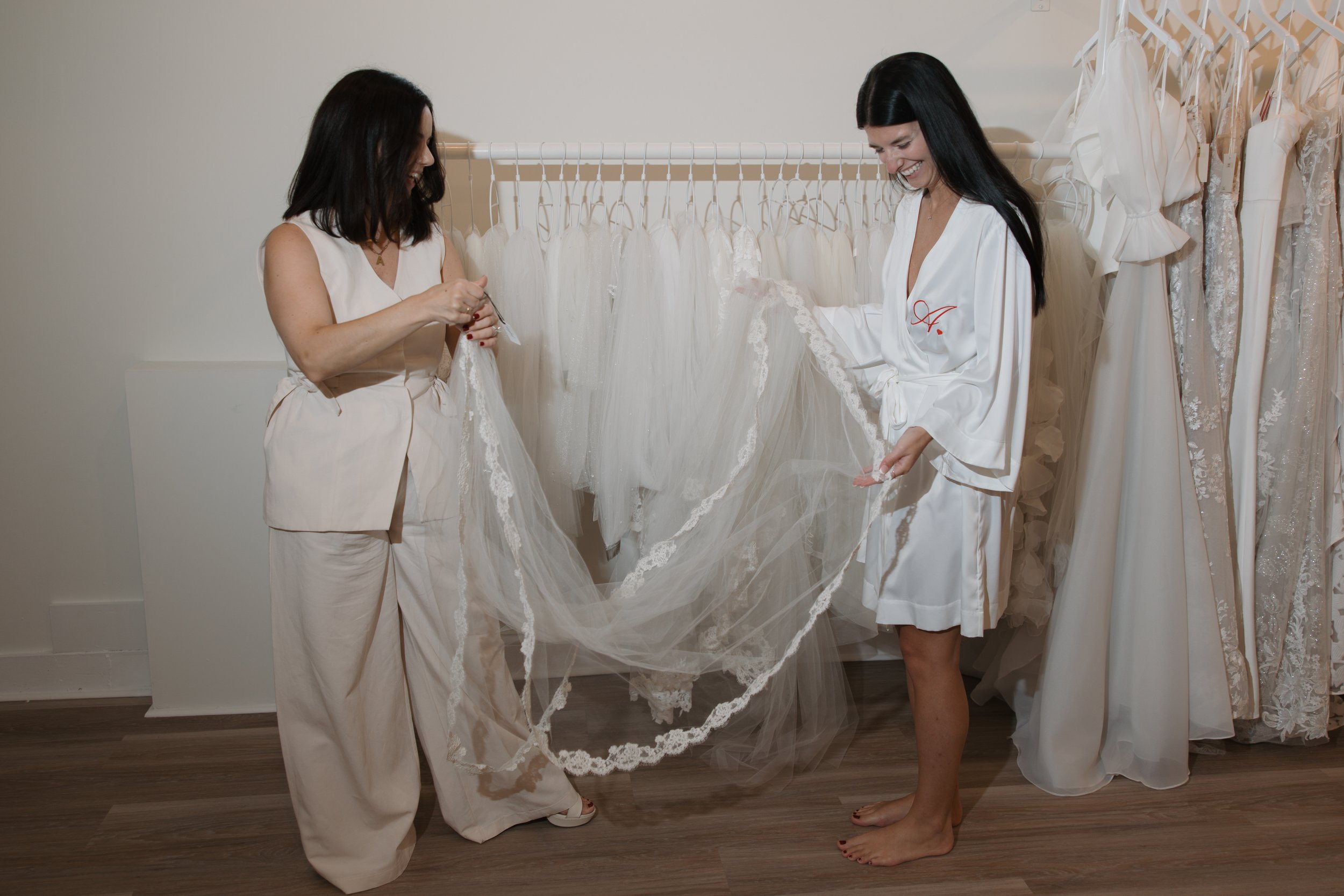
Trying different wedding veil styles in person gives you clarity that photos cannot. Movement, weight, and proportion become easier to understand. Our Sara Gabriel veils can be made in endless combinations. Think varying levels of silk tulle, custom lengths to the inch, and trims including pearl, Swarovski crystals, French lace, horsehair trim, lettering, and more. Not to mention the option to add a blusher (even a detachable blusher!) There is no doubt we can create your dream veil.
Bring inspiration, but stay open to options you may not have considered. Sometimes the best choice becomes clear only when you see everything together. Your gown, hairstyle, and accessories should work as one. And your Aisle Studio stylist will guide you to the choices that make the most sense.
Bringing Your Aisle Style Together with the Right Guidance
If you are just getting started, begin with finding a gown that aligns with your style. This gives you a clear direction for everything that follows.
At Aisle Studio, you can find a gown that feels right for you. Your aisle studio stylist can help you explore accessories that match your gown and the look you are going for.
When you are ready, book your appointment and start bringing your look together.